
Court software for county and district courts
County and district courts run criminal, civil, family, and probate dockets side by side. eCourtDate coordinates jury operations, warrants, scheduling, and analytics across every division, so practice stays consistent and leadership sees the whole court at once.
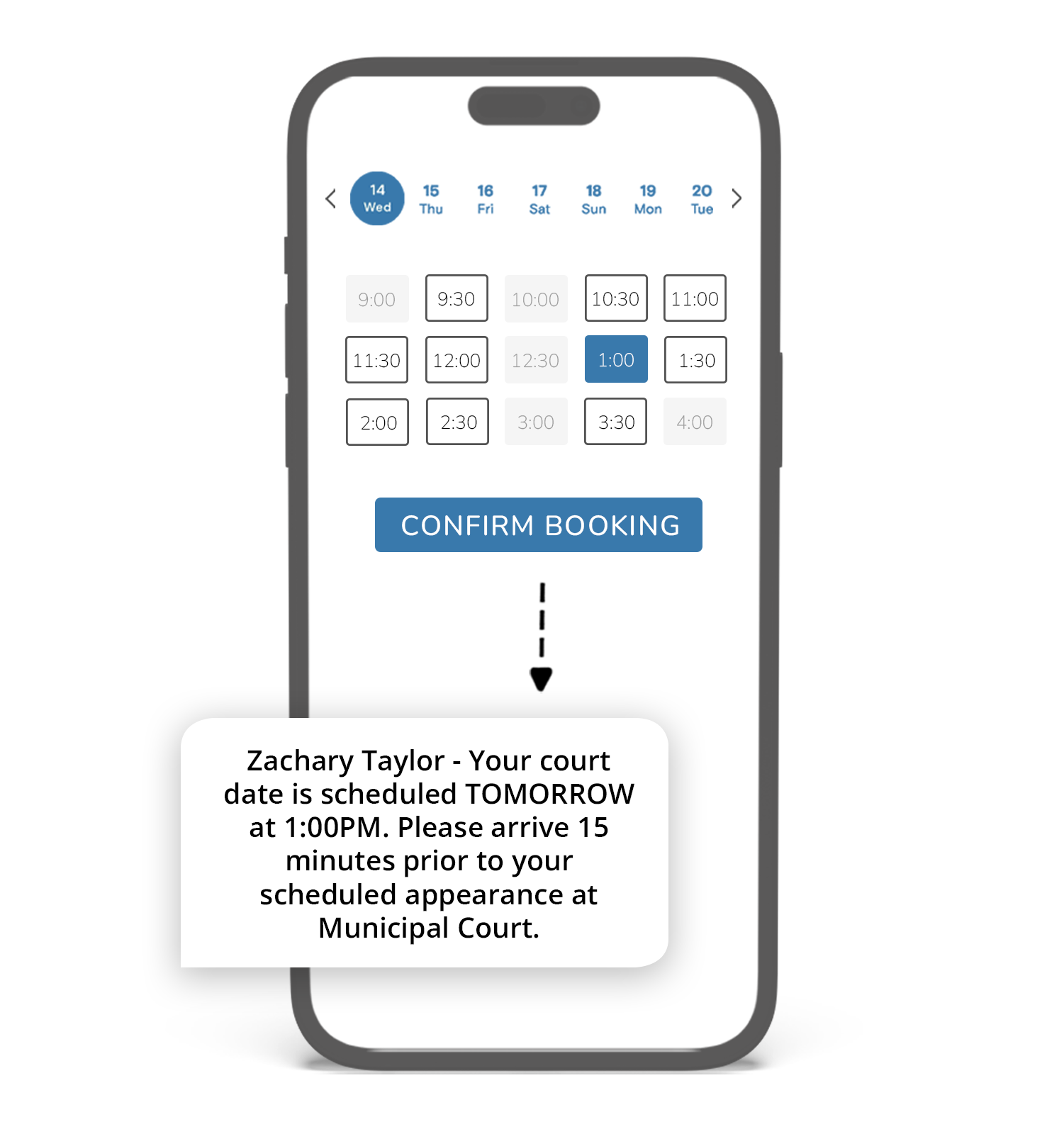
Built for county and district courts
eCourtDate is built for county and district courts: the general-jurisdiction courts that handle felonies, civil litigation, family, and probate across multiple divisions, judges, and locations. Coordinating consistent practice across those divisions, keeping jury pools full, and moving warrants without delay is a daily challenge that paper and disconnected systems make harder. eCourtDate connects court administrators, judges, and jury managers to the same case record across every division.
Court administrators and clerks of court
Coordinate scheduling, warrants, juries, and notifications across divisions instead of separate manual processes.
Presiding judges and judicial officers
Move warrants in minutes with electronic routing and e-signature, and see docket flow across the whole court.
Jury managers
Refill the wheel, summon across channels, and take qualification, excusals, and deferrals online, so panels are seated without a week on the phone.
IT directors and CISOs
Run a CJIS-compliant platform on AWS GovCloud with no local infrastructure to maintain, and integrate with the systems you already use.
The work piling up behind the docket
Divisions operate in silos
Criminal, civil, family, and probate divisions run their own processes on disconnected systems. Practice drifts from one division to the next, and no one has a single view of how the whole court is moving.
Keeping jury pools full is constant work
Mailed summons, paper questionnaires, and phone-tag reminders make low response rates and last-minute shortfalls routine. Refilling the wheel, working the excusal and deferral pile, seating each panel, and paying every juror all fall on a small jury office.
Warrant processing stalls between steps
Paper warrant workflows lose time between application, judicial review, and service, especially after hours, when finding an available judge means an officer waits instead of works.
No real-time view across the court
When caseload, outcome, and deadline data live in separate systems, leadership cannot see bottlenecks, measure performance, or allocate resources based on evidence.
What you get
The capabilities county and district courts rely on most, each one built in, configurable, and connected to the rest of the platform.
Jury management
Run the full juror lifecycle: the jury wheel, summons, online qualification and deferrals, panel draws, voir dire support, attendance, and juror pay.
Learn moreElectronic warrants
Prepare, route, e-sign, and track warrants digitally, with a tamper-evident, court-admissible chain of custody.
Learn moreCase workflow automation
Route cases, create tasks, track jurisdiction deadlines, and enforce SLAs across criminal, civil, family, and probate.
Learn moreScheduling and calendars
Run events, hearings, and dockets from one calendar by judge, division, and location, with automated reminders.
Learn moreVirtual hearings and meetings
Hold hearings and conferences over native browser video, with nothing for the public to download, plus Zoom, WebEx, and Teams.
Learn moreDocument generation
Generate notices, orders, and packets from templates or AI, collect e-signatures, and deliver by portal, email, or your own printers.
Learn moreEvidence management
Store, track, and share digital evidence with a tamper-evident chain of custody and granular access controls.
Learn moreAI detection
Flag AI-generated filings, fabricated citations, and synthetic evidence for human review before they enter the record.
Learn moreData dashboards
See caseloads, outcomes, and efficiency across every division in real time, private for staff or public for transparency.
Learn more
From your data to your outcomes
- 01
Connect every division
Sync cases and events from your case management system across criminal, civil, family, and probate, so every division works from one record.
- 02
Digitize jury and warrants
Move summons, selection, and compensation online, and route warrants to available judges for e-signature.
- 03
Automate the workflow
Cases route themselves, deadlines are tracked, and reminders and documents fire from each scheduled event.
- 04
Measure across the court
Real-time dashboards show caseload, outcome, and efficiency data across every division for evidence-based decisions.
Where this gets your court
Over a few months, the divisions stop feeling like separate courts. Criminal, civil, family, and probate work from the same record, so practice is consistent and leadership can finally see the whole court at once. Jury pools stay full because summons, qualification, and reminders run automatically, and panels are assembled and compensated without an envelope-stuffing marathon. Warrants that used to wait hours for a signature are routed and signed in minutes, even after hours. And when a presiding judge or county commissioner asks how the court is performing, the answer is a live dashboard, not a three-week data pull.
Up to 70%
Faster warrant processing
Up to 30%
Higher juror response rates
100%
Digital, tamper-evident audit trail
Outcomes the whole agency feels
One court, not four divisions
Criminal, civil, family, and probate share the same case record, security, and integrations, so practice is consistent and coordination stops being manual.
Faster warrants, fuller juries
Electronic routing turns warrant turnaround from hours into minutes, and automated juror outreach keeps pools full and panels ready.
Visibility for leadership
Real-time dashboards across every division replace stale exports, so judges and administrators can see bottlenecks and act on evidence.
Compliant and integrated
eCourtDate is CJIS compliant on AWS GovCloud, with SSO and audit trails, and integrates with the systems you already use.
Compliant, accessible, and accountable by default
Every capability runs on the same government-grade foundation. See the security overview.
CJIS compliant
On AWS GovCloud, with SSO, role-based access, and complete audit trails.
TCPA & opt-in
Consent, opt-out, and quiet-hours enforced automatically on every send.
WCAG 2.2 AA
Accessible to the public across every interface and channel.
100+ languages
Automatic detection and translation on every message and portal.
Products built for county and district courts
Start with one and add more as you go. Every product shares the same data, security, and integrations.
Case Management
One modern record for every case, shared across communications, filings, payments, and supervision.
Learn moreAI Chatbots & Voice
Answer the public 24/7 across chat, voice, email, and text, in 100+ languages, without adding staff.
Learn moreWeb Portals
Branded self-service portals for case info, documents, payments, files, and check-ins.
Learn moreForms & Submissions
A full forms builder with conditional logic: collect, manage, and route submissions into workflows.
Learn moreVisitor Management
Touchless visitor sign-in, digital waitlists, and live queue management for the courthouse.
Learn morePayment Reminders
Increase collections with automated, multi-channel payment reminders and plan tracking. Paying happens in GovPayPlan.
Learn more
Frequently asked questions
Common questions from county and district courts evaluating eCourtDate.
What is eCourtDate for county and district courts?
Can eCourtDate coordinate across multiple divisions?
How does electronic warrant processing work?
Does eCourtDate handle jury management?
Is eCourtDate CJIS compliant?
Can eCourtDate handle family and juvenile matters?
Can eCourtDate be our case management system, or work with the one we have?
Solutions for other agencies
Municipal & Justice Courts
High-volume courts with limited staff need automation that works from day one. eCourtDate handles the repetitive work so clerks can focus on the people in front of them.
State Court Administration
State offices need statewide consistency, centralized analytics, and the ability to deploy programs across hundreds of courts simultaneously.
Probation & Pretrial Services
Supervision officers managing growing caseloads need tools that automate routine monitoring and surface the cases that require human attention.
Bring eCourtDate to your agency
Get a demo tailored to your agency's workflows.