
Court software for municipal and justice courts
High-volume dockets, small staff. eCourtDate automates the repetitive work behind every case, from reminders to payments to filings, so your clerks spend their time on the people at the counter, not the backlog behind them.
Built for municipal and justice courts
eCourtDate is built for municipal and justice courts: the local courts that handle traffic citations, city ordinance violations, misdemeanors, and small claims, often processing thousands of cases a month with only a handful of clerks. These are the courts most people actually encounter, and the courts where a missed reminder, an uncollected fine, or a line at the counter carries the largest cumulative cost. eCourtDate gives municipal court clerks, administrators, and judges the automation to run that volume without adding staff.
Court administrators and clerks
Automate the daily docket, reminders, payments, and front-counter requests instead of working through a stack of manual, repetitive tasks.
Presiding and municipal judges
Preside over cleaner dockets with faster dispositions and fewer bench warrants caused by missed appearances.
Finance and collections staff
Recover more of the fines and fees the court is owed through systematic reminders and a payment path that runs on GovPayPlan.
IT and court technology directors
Deploy a CJIS-compliant platform on AWS GovCloud with no local infrastructure to maintain, and integrate with the systems you already use.
The work piling up behind the docket
High caseloads, small teams
Municipal and justice courts process thousands of traffic, ordinance, and misdemeanor cases a month, often with only a handful of clerks. Every manual step, a reminder dialed by hand, a payment logged on paper, a form re-keyed from a scan, multiplies across that volume until clearing the backlog becomes the whole job.
Failure to appear drives everything else
A single failure to appear (FTA) sets off a chain reaction: a bench warrant issued, a docket reset, an arrest processed, and a case that has to start over. With the national FTA rate near 23%, those downstream costs land back on the same small staff, week after week, crowding out everything else.
Fines and fees go uncollected
When no system sends the next reminder and there is no convenient way to pay, balances quietly age out. The court loses revenue owed to the city and the state, and people fall further behind on obligations they could have met with a timely nudge and a one-tap payment link.
The counter and the phone never stop
When is my court date, how much do I owe, where do I go, and can I reschedule arrive all day, in person, by phone, and in many languages. Answering the same questions by hand pulls clerks off the case processing only they can do, and callers who never get through simply miss their dates.
What you get
The capabilities municipal and justice courts rely on most, each one built in, configurable, and connected to the rest of the platform.
Multi-channel court reminders
Behavioral SMS, email, and voice reminders tied to the real case, in 100+ languages.
Learn morePayment reminders and plans
Automated balance and due-date reminders with payment-plan tracking. Paying happens in GovPayPlan.
Learn moreFines and fees assessment
Compute the right obligation from your fee schedules, then apply ability-to-pay and waivers, on one ledger.
Learn moreSelf-service web portals
Branded, mobile-first portals for case lookups, documents, payments, and check-ins. No app to download.
Learn moreOnline forms and submissions
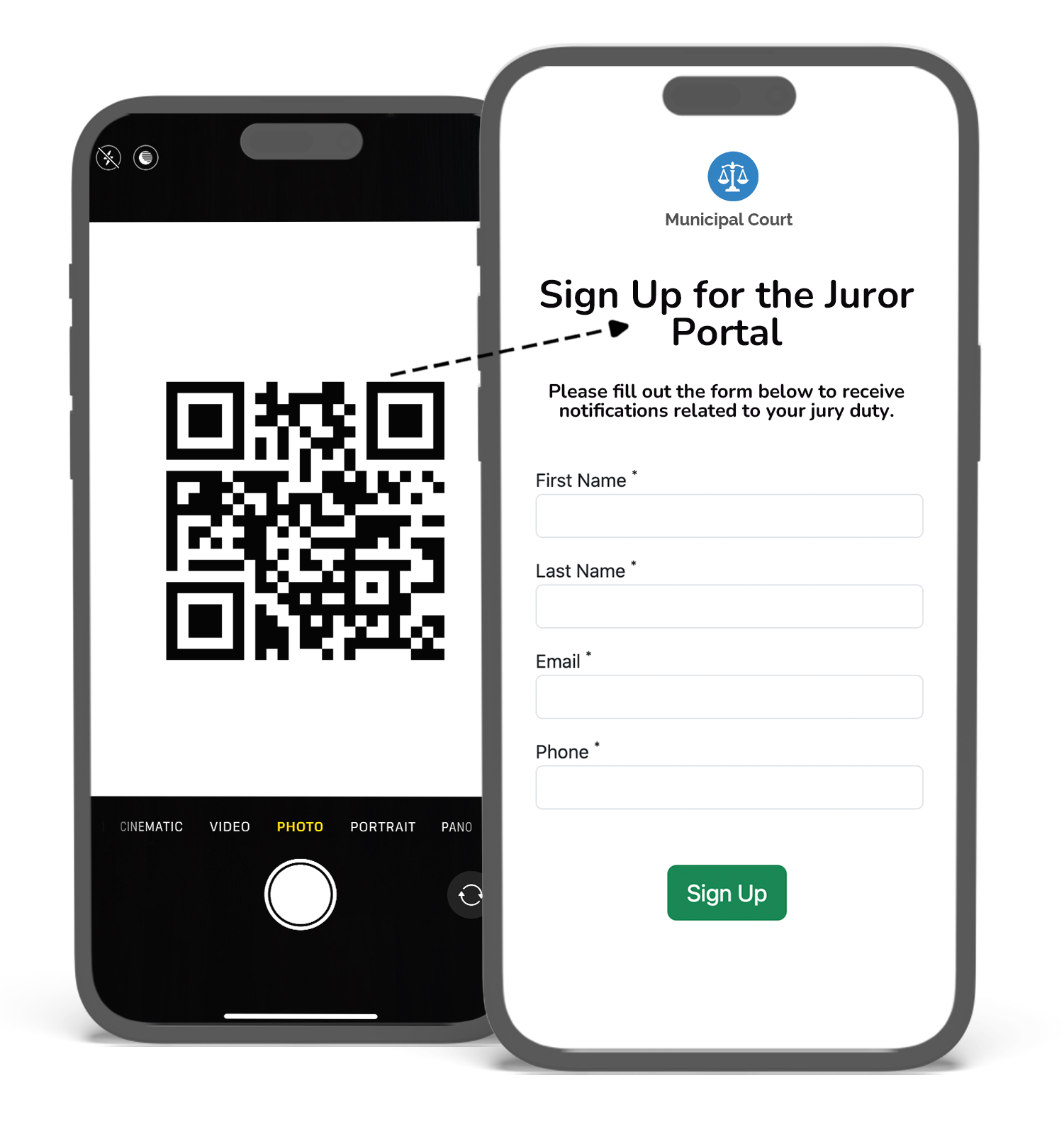
Build any form with conditional logic, publish to portals and QR codes, and trigger workflows from each submission.
Learn moreCase workflow automation
Route cases, create tasks, track jurisdiction deadlines, and enforce SLAs without manual handoffs.
Learn moreScheduling and calendars
Run events, hearings, and dockets from one calendar, and let the public self-schedule against your rules.
Learn moreAI chatbots and voice
Answer when is my court date and how do I pay 24/7 across chat, text, and phone, in 100+ languages.
Learn more
From your data to your outcomes
- 01
Connect your case data
Sync cases and events from the systems you keep, or import them. eCourtDate runs standalone, and connects by REST API or SFTP.
- 02
Turn on reminders and payments
Behavioral reminders and payment notifications start going out on the channels people actually use. Most courts are live in days, not months.
- 03
Open self-service
Publish a branded portal so the public can look up dates, pay, file forms, and check in without calling or coming in.
- 04
Watch the backlog shrink
Track appearance, collection, and workload outcomes in real time, and let the automation carry the routine load.
Where this gets your court
Within a few months, the daily picture changes. Missed court dates stop snowballing into bench warrants, because people are reminded by text, email, and voice the same way they are reminded about every other appointment in their lives, in the language they actually speak. Fines and fees get paid, because the balance and the due date arrive automatically and paying is one tap away through GovPayPlan. The lobby is calmer and the phones are quieter, because case lookups, payments, forms, and check-ins live in a portal that never closes. Clerks are no longer the bottleneck for every routine request, so they can give real attention to the cases and the people who need judgment, not data entry. The court runs on a platform that scales with the docket, instead of on overtime and good intentions.
Up to 50%
Reduction in failure-to-appear rates
< 1 day
Typical payback period
24/7
Self-service access for the public
Outcomes the whole agency feels
Work removed from every clerk’s day
Reminders, payment follow-up, intake forms, and the most common questions run automatically, so a small team keeps pace with a rising docket without adding headcount.
Measurable return, fast
Fewer failures to appear mean fewer warrants, arrests, and resets. Higher collection rates mean recovered revenue for the city and state. Both outcomes show up in the first quarter, which makes the payback easy to defend in a budget meeting.
One connected platform
Every message, payment, form, and filing ties back to the real case, instead of scattering across a separate notification vendor, a payment page, and a filing cabinet that never share data.
Compliant, low burden for IT
eCourtDate is CJIS compliant on AWS GovCloud, with SSO, audit trails, and no local infrastructure to run, and integrates with the systems you already use.
Compliant, accessible, and accountable by default
Every capability runs on the same government-grade foundation. See the security overview.
CJIS compliant
On AWS GovCloud, with SSO, role-based access, and complete audit trails.
TCPA & opt-in
Consent, opt-out, and quiet-hours enforced automatically on every send.
WCAG 2.2 AA
Accessible to the public across every interface and channel.
100+ languages
Automatic detection and translation on every message and portal.
Products built for municipal and justice courts
Start with one and add more as you go. Every product shares the same data, security, and integrations.
Case Management
One modern record for every case, shared across communications, filings, payments, and supervision.
Learn moreMessaging & Court Reminders
Behavioral, multi-channel reminders that cut failure-to-appear rates and keep every case moving.
Learn moreAI Chatbots & Voice
Answer the public 24/7 across chat, voice, email, and text, in 100+ languages, without adding staff.
Learn moreWeb Portals
Branded self-service portals for case info, documents, payments, files, and check-ins.
Learn moreClient Management
One record for every person you serve: profiles, photos, tasks, and a self-service client portal.
Learn moreForms & Submissions
A full forms builder with conditional logic: collect, manage, and route submissions into workflows.
Learn more
Frequently asked questions
Common questions from municipal and justice courts evaluating eCourtDate.
What is eCourtDate for municipal courts?
How much can a municipal court reduce failure to appear?
Does eCourtDate process payments?
Will eCourtDate work with our case management system?
Is eCourtDate CJIS compliant?
How long does implementation take for a small municipal court?
Solutions for other agencies
County & District Courts
Multi-department courts managing complex case types need a platform that coordinates work across divisions, judges, and locations.
State Court Administration
State offices need statewide consistency, centralized analytics, and the ability to deploy programs across hundreds of courts simultaneously.
Probation & Pretrial Services
Supervision officers managing growing caseloads need tools that automate routine monitoring and surface the cases that require human attention.
Bring eCourtDate to your agency
Get a demo tailored to your agency's workflows.