
Court-connected software for law enforcement
Officers in the field need digital tools that cut paperwork, speed warrant turnaround, and reach the public during critical events. eCourtDate connects law enforcement to the court with electronic citations, digital warrants, evidence management, and multilingual alerts.
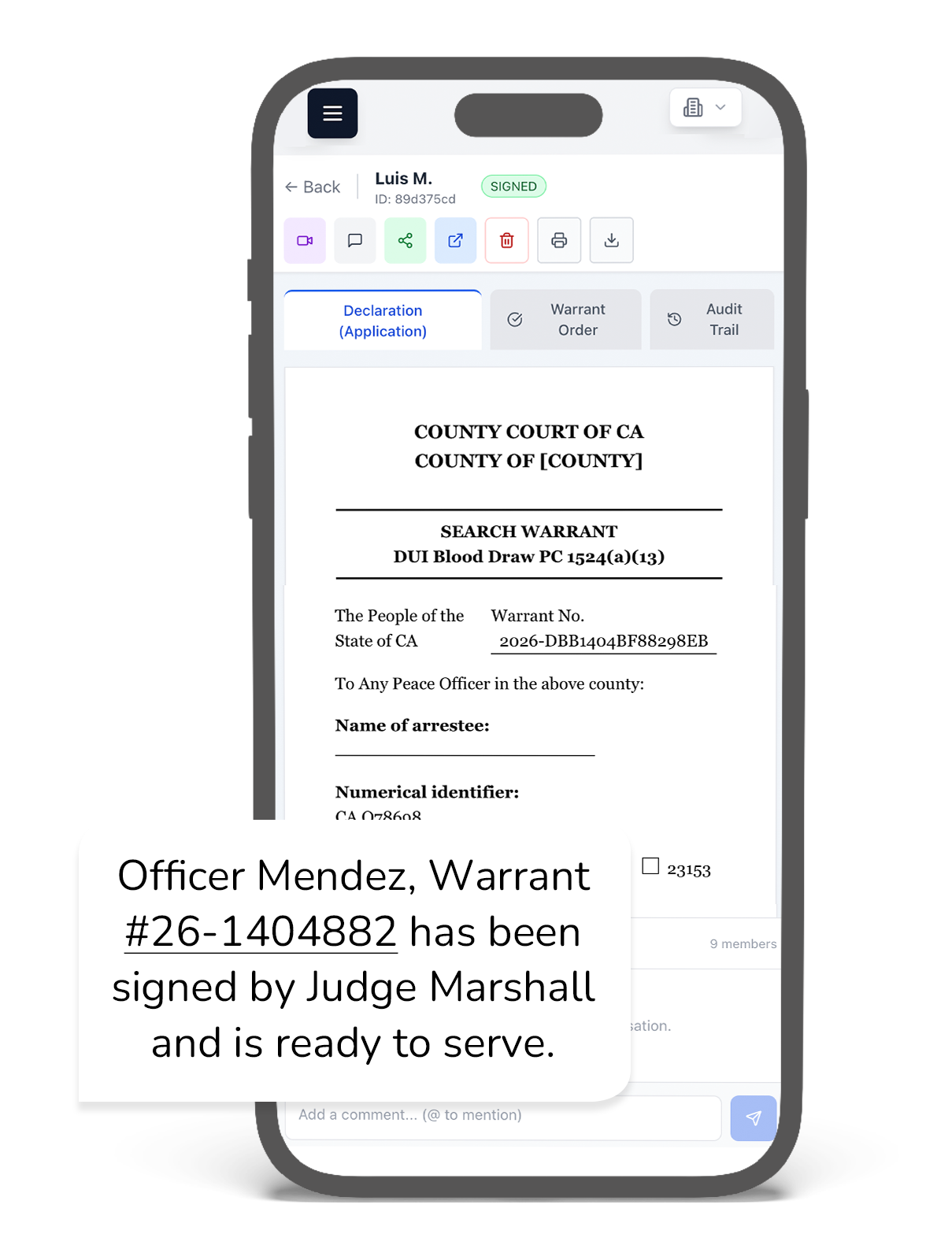
Built for law enforcement agencies
eCourtDate is built for law enforcement agencies that work hand in hand with the courts: issuing citations, applying for warrants, managing evidence, and communicating with the public. Paper citations re-keyed at the station, warrants that wait hours for a signature, and no infrastructure to reach the community during an incident all cost officers time they should spend on patrol. eCourtDate gives officers, command staff, and records units field tools that file straight into the court.
Patrol officers
Issue citations and apply for warrants from a mobile device in the field, with cases filed to the court automatically.
Command staff
Speed warrant turnaround, keep officers on the street, and reach the public during incidents and safety events.
Records and evidence units
Manage digital evidence with a tamper-evident chain of custody and share it securely with prosecutors and the court.
Agency IT directors
Run CJIS-compliant tools on AWS GovCloud that connect to court systems, with no local infrastructure to maintain.
The work piling up behind the docket
Paper citations slow everything down
Handwritten citations are re-keyed at the station, which delays case initiation, introduces transcription errors, and gives recipients no easy way to resolve them.
Warrant turnaround wastes officer time
Getting a warrant signed can take hours when a judge is hard to reach, especially after hours, and an officer waits instead of working the next call.
Reaching the public during incidents is hard
Notifying the right people during emergencies or community-safety events takes infrastructure most departments lack, and language barriers make it harder.
Evidence moves on drives and email
Body-cam video, photos, and documents pile up with no secure, auditable way to store and share them, creating chain-of-custody gaps and disclosure risk.
What you get
The capabilities law enforcement agencies rely on most, each one built in, configurable, and connected to the rest of the platform.
Electronic citations
Issue citations from a mobile device in the field. Cases initiate in the court system automatically, with a GovPayPlan payment link sent to the recipient.
Learn moreElectronic warrants
Prepare and submit warrant applications digitally, route to available judges for e-signature, and track service in real time.
Learn moreEvidence management
Store body-cam video, photos, and documents securely, with a tamper-evident chain of custody and controlled sharing.
Learn moreEmergency and community alerts
Send multilingual SMS, email, and voice alerts to targeted groups during critical incidents and safety events.
Learn moreMagistration and first appearance
Run the first-appearance workflow from arrest intake through bail and counsel, connected to booking.
Learn moreVirtual hearings and meetings
Hold virtual magistration and appearances over native browser video, including from jail booking, with no downloads.
Learn moreBond management and refunds
Record bond postings from the field, track conditions, and run forfeiture, exoneration, and refunds on one ledger.
Learn more
From your data to your outcomes
- 01
Issue citations in the field
Officers issue citations from a phone, tablet, or MDT, and the case files with the court automatically, with a payment link to the recipient.
- 02
Submit warrants digitally
Warrant applications route to available judges for e-signature, with service tracked in real time and a full chain of custody.
- 03
Manage evidence securely
Body-cam video, photos, and documents are stored with a tamper-evident chain of custody and shared with prosecutors by secure link.
- 04
Reach the public
Multilingual alerts go out to targeted groups during incidents and community-safety events, by SMS, email, and voice.
Where this gets your agency
Within a few months, the station paperwork that used to follow every shift is gone. Citations are filed with the court the moment they are issued, with a payment link already in the recipient’s hand, so nothing is re-keyed and nothing is lost. A warrant that once meant an hour of waiting is routed to an on-call judge and signed in minutes, even at 2 a.m., and the officer is back on patrol. Body-cam video and case files live in a secure repository with a chain of custody that holds up in court, shared with prosecutors by link instead of by drive. And when something happens in the community, the agency can reach the right people, in the right language, in seconds.
Up to 90%
Less citation paperwork
Up to 70%
Faster warrant turnaround
Instant
Multilingual public notification
Outcomes the whole agency feels
Officers back on the street
Field citations and digital warrants cut the station paperwork and the waiting, so officers spend their time on patrol, not data entry.
Faster warrant turnaround
Electronic routing to on-call judges turns warrant turnaround from hours into minutes, including after hours.
A defensible evidence chain
Body-cam video, photos, and documents are stored and shared with a tamper-evident chain of custody that stands up in court.
Compliant and connected
eCourtDate is CJIS compliant on AWS GovCloud, with SSO and audit trails, and files directly into court case management systems.
Compliant, accessible, and accountable by default
Every capability runs on the same government-grade foundation. See the security overview.
CJIS compliant
On AWS GovCloud, with SSO, role-based access, and complete audit trails.
TCPA & opt-in
Consent, opt-out, and quiet-hours enforced automatically on every send.
WCAG 2.2 AA
Accessible to the public across every interface and channel.
100+ languages
Automatic detection and translation on every message and portal.
Products built for law enforcement agencies
Start with one and add more as you go. Every product shares the same data, security, and integrations.
Messaging & Court Reminders
Behavioral, multi-channel reminders that cut failure-to-appear rates and keep every case moving.
Learn moreVirtual Hearings & Meetings
Native, browser-based video for magistration, hearings, and live check-ins. No downloads for anyone, plus Zoom, WebEx, and Teams.
Learn moreElectronic Warrants
A complete warrant system: prepare, route, swear in, e-sign, serve, and track, with a permanent chain of custody.
Learn moreElectronic Citations
Issue citations paperlessly from the field with real-time case-system sync and payment links.
Learn moreMagistration
Run the full first-appearance workflow on one record: arrest intake, the magistration hearing, bail decisions, protective orders, and counsel appointment, configured to your county.
Learn moreEvidence Management
Securely store, track, and share digital evidence with end-to-end chain of custody.
Learn more
Frequently asked questions
Common questions from law enforcement agencies evaluating eCourtDate.
What is eCourtDate for law enforcement?
How do electronic citations work?
How much faster is digital warrant processing?
Can eCourtDate manage digital evidence?
Can the agency alert the public during an incident?
Is eCourtDate CJIS compliant?
Solutions for other agencies
Municipal & Justice Courts
High-volume courts with limited staff need automation that works from day one. eCourtDate handles the repetitive work so clerks can focus on the people in front of them.
County & District Courts
Multi-department courts managing complex case types need a platform that coordinates work across divisions, judges, and locations.
State Court Administration
State offices need statewide consistency, centralized analytics, and the ability to deploy programs across hundreds of courts simultaneously.
Bring eCourtDate to your agency
Get a demo tailored to your agency's workflows.