
Supervision Compliance
Keep pretrial and probation clients compliant and intervene before a missed condition becomes a violation. Risk scoring aims officer time where it matters, while reminders, check-ins, and testing schedules run on their own.
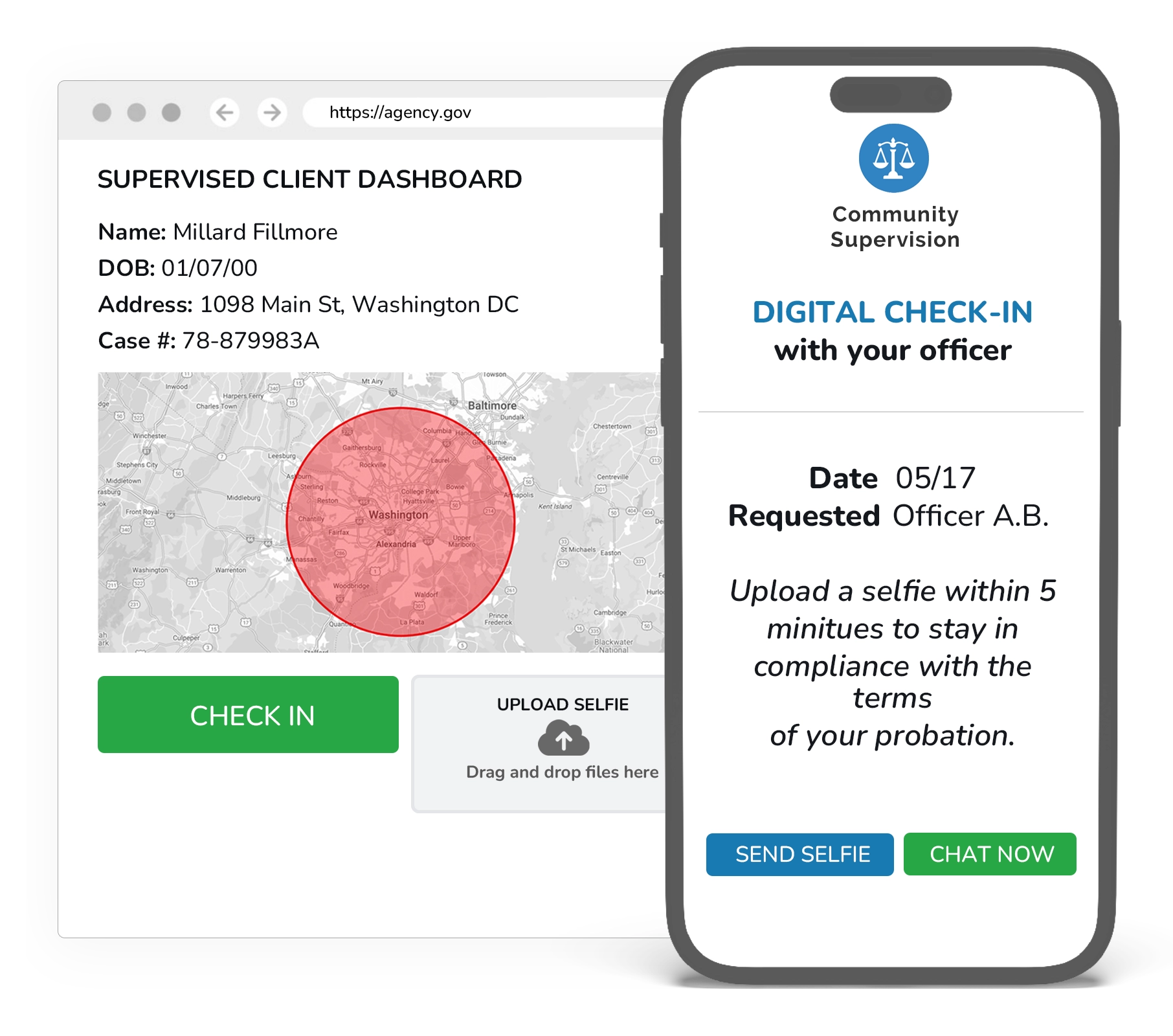
Carry a bigger caseload, catch problems sooner
Keep pretrial and probation clients compliant and intervene before a missed condition becomes a violation, so officers manage more people with better outcomes.
Officers spend the day on logistics, not judgment
Manual check-ins, appointment reminders, and test scheduling eat the hours that should go to the clients who actually need attention.
Everyone gets the same supervision
Without risk scoring, low-risk and high-risk clients get the same cadence, so attention is spread thin instead of aimed where it matters.
Problems surface after the violation
A missed appointment or test is often discovered late, after the chance to redirect the client and avoid a revocation has passed.
Conditions are easy to lose track of
Appointments, drug tests, community service, and other conditions live across notes and calendars, so compliance is hard to see at a glance.
From your case data to the outcome
- 01
Score the caseload
eCourtDate scores each client with validated instruments and its own predictive model, so supervision intensity matches risk.
- 02
Automate the routine
Condition reminders, appointment notices, and randomized testing schedules run on their own, in the client’s language, across channels.
- 03
Verify and check in
Clients check in from a phone with GPS verification, and geofencing flags restricted zones, so contact does not require an office visit.
- 04
Intervene early
Missed conditions trigger documentation, hearing scheduling, and stakeholder notification automatically, so officers act before a problem becomes a violation.
What it does
Geolocation Check-Ins
GPS-verified check-ins from mobile devices. Geofencing alerts for restricted zones.
Predictive Risk Scoring
AI models identify clients at highest risk of non-compliance, enabling prioritized intervention.
Condition Reminders
Automated reminders for appointments, drug tests, community service, and other conditions.
Randomized Testing
Automated random selection for drug testing with notification and compliance logging.
Violation Workflows
Automated violation documentation, hearing scheduling, and stakeholder notification.
Caseload Dashboard
Officers see their full caseload with risk levels, compliance status, and upcoming deadlines.
Supervision aimed where it matters
The routine, reminders, check-ins, and testing, runs itself, and risk scoring puts officer time where the risk actually is. Drift shows up early enough to redirect a client instead of revoking them, and every condition is visible on one record. Officers carry larger caseloads not by working faster, but because the system handles the parts that never needed an officer.
10,000+
Courts and justice locations on eCourtDate
24
States with deployments
100+
Languages for client communication
What powers this work
This outcome runs on products you can adopt together or one at a time. Every product shares the same data, security, and integrations.
Community Supervision
Monitor pretrial and probation clients with risk scoring, geo check-ins, and automated alerts.
Learn moreRisk Assessments
Validated pretrial instruments plus eCourtDate’s own predictive risk scoring, connected to the decision, supervision, and reminders.
Learn moreMessaging & Court Reminders
Behavioral, multi-channel reminders that cut failure-to-appear rates and keep every case moving.
Learn moreForms & Submissions
A full forms builder with conditional logic: collect, manage, and route submissions into workflows.
Learn more
Compliant, accessible, and accountable by default
Every capability runs on the same government-grade foundation. See the security overview.
CJIS compliant
On AWS GovCloud, with SSO, role-based access, and complete audit trails.
TCPA & opt-in
Consent, opt-out, and quiet-hours enforced automatically on every send.
WCAG 2.2 AA
Accessible to the public across every interface and channel.
100+ languages
Automatic detection and translation on every message and portal.
Frequently asked questions
Common questions about supervision compliance with eCourtDate.
How does risk-based supervision work?
How do clients check in?
Can it help prevent violations?
Does it handle drug testing schedules?
Can eCourtDate connect to the systems we already have?
Is client data secure?
Built for these agencies
Probation & Pretrial Services
Supervision officers managing growing caseloads need tools that automate routine monitoring and surface the cases that require human attention.
County & District Courts
Multi-department courts managing complex case types need a platform that coordinates work across divisions, judges, and locations.
Jails & Corrections
Jails and corrections agencies need the magistration clock to start at booking, hearings without transport, and supervision that continues after release.
See Supervision Compliance in action
Get a demo tailored to your agency's workflows.